Key Highlights
- Why paid search is one of the fastest ways to generate qualified leads
- Key differences between SEO and paid search
- Top five paid search tactics to increase traffic and conversions
- Current PPC trends shaping 2026 advertising strategies
- How to build a strong paid search strategy that delivers ROI
Are you a business owner challenged with finding enough qualified leads for your business? Don't worry, you are not alone! This is one of the top questions we get regularly. It's the classic catch-22; you have a million things to do to support your business, and it would be great to solve the ongoing issue of finding enough people who want to buy your product or service regularly.
This blog article will explain the various paid search tactics that a company can use to generate leads more quickly for its business.
What is Paid Search?
Paid search is a form of online advertising where you pay to have your website show up at the top of search engine results, like on Google or Bing. These ads usually appear above or next to the organic (unpaid) results and are marked as "sponsored" or "ad". Running effective advertising campaigns means understanding how these placements work and how much you are willing to bid for them.
Why is Paid Search Important?
Paid search is important because it helps businesses get in front of the right people at the right time, when they’re actively searching for what you offer. In fact, paid search dominates digital ad formats with a 39.5% market share, showing it’s bigger than any other format in online advertising.
Here's why it matters:
1. Instant Visibility
- Your ad can appear at the top of Google today.
- This is helpful if your website doesn’t rank organically yet.
2. Targeted Reach
- You can target by location, device, time, language, and more.
- This avoids wasted ad spend and brings in qualified leads.
3. Cost Control
- You set the daily or monthly budget.
- You only pay when someone clicks.
4. Performance-Based
- Every click, impression, and conversion is tracked.
- You can see what works and adjust quickly.
5. Supports SEO and Other Channels
- Paid search fills the gap while organic SEO takes time.
- It can boost traffic for time-sensitive campaigns or promotions.
6. Competitive Advantage
- You can outrank competitors, even if they have stronger SEO.
- Especially useful in competitive or seasonal industries.
Paid search is a key part of digital marketing because it helps companies reach potential customers when they are ready to act.
PPC Trends
Here are the current PPC (pay‑per‑click) trends that matter in 2026. These reflect how search engines, user behavior, and technology are changing advertising.
1. AI and Automation in Campaigns
- Smart bidding uses machine learning to set bids.
- Automated ad creation tests headlines and descriptions.
- You still guide strategy; AI handles the heavy lifting.
2. Audience Targeting Beyond Keywords
- Advertisers focus on interests, behavior, and intent signals.
- First-party data (your own customer info) is used more to build audiences.
- Retargeting and custom segments improve relevance.
3. Video Ads in Search and Social
- Short video ads are growing on platforms like Google, YouTube, and TikTok.
- Users engage more with visual content.
- Including video in PPC boosts visibility and click rates.
4. Privacy, Data Restrictions, and Attribution
- Browsers and platforms limit third‑party tracking.
- Advertisers rely on first‑party tracking and privacy‑friendly data.
- Attribution models are shifting to machine learning or modeled conversions.
5. Performance Max and Unified Campaigns
- Platforms like Google push unified campaign types that run across search, display, YouTube, and more.
- These campaigns aim to find conversions across many placements.
- You still set goals and assets, then the system optimizes.
6. Local and “Near Me” Search Ads
- Mobile search continues to drive local intent clicks.
- Location signals, business info, and calls to action are vital.
- Local inventory ads help stores drive foot traffic.
7. Chat and Conversational Experiences
- Search engines and social platforms support chat‑based action buttons.
- Ads lead to direct conversations with customers.
- Chat-to-conversion is becoming a new performance signal.
8. Creative Testing at Scale
- More ad variations help find what works.
- Responsive ads automatically combine headlines and descriptions.
- Testing improves click‑through and lowers cost per conversion.
9. Cross‑Channel Performance Measurement
- Marketers link search, social, video, and commerce data.
- Insights help optimize across channels, not just within one platform.
- Integrated reporting matters more.
10. AI-Generated Content in Ads
- AI tools help write better headlines and descriptions fast.
- You still review for accuracy and brand voice.
- Good copy improves engagement and lowers costs.
Top Paid Search Strategies
1. Good Paid Search Starts with Great Keyword Research
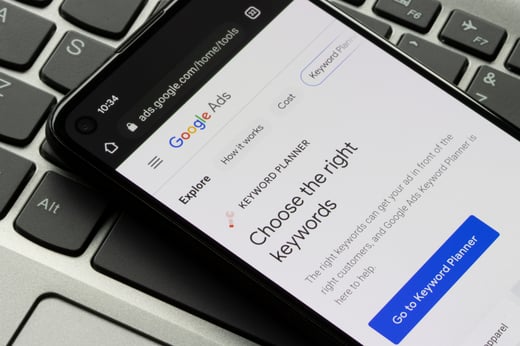
PPC is one of the fastest ways to generate leads if you choose the right keywords. Start by using keyword tools like Google Keyword Planner, SEMrush, or Ahrefs. Focus on long-tail keywords with strong intent and lower competition. These bring in users who are closer to making a decision. If you're already running ads, review your search terms regularly. Behavior changes over time, and your keywords should reflect how people search now, not six months ago.
Many businesses handle PPC in-house, but working with an experienced partner can improve results. Experts spot opportunities and reduce wasted spend, helping you get more qualified leads from the same budget.
Don’t rely on guesswork. Use tools like Google Keyword Planner, SEMrush, or Ahrefs to find long-tail keywords your customers are actually searching for.
2. Serve Up Relevant Offers at the Right Time with PPC
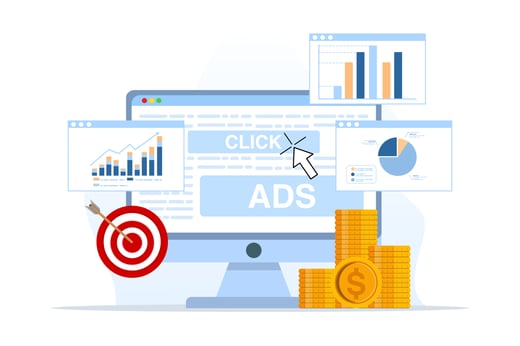
PPC is most effective when your ads match what people want, at the exact moment they want it. Start with text ads. Test different versions to see what converts. The goal is to align your message with search intent. If someone’s searching for takeout at 6 PM, your ad should promote a dinner deal, not a blog post. Use ad scheduling to run offers at peak hours. This improves results without increasing your spend.
High-volume search terms are ideal for lead generation. PPC gets you in front of people right away, unlike SEO, which takes time. It’s a smart way to reach buyers early and fast.
| Use ad scheduling to display offers during high-conversion windows (e.g., lunch/dinner for food delivery). Align your message with the time of day for better results. |
3. Expand Your Brand Reach with Display Advertising
Display ads help you stay visible to potential customers even when they’re not actively searching. These ads appear on relevant websites and can be text, image, video, or interactive formats.
Use image-based ads to boost brand awareness or video ads to explain complex offerings. Display works well when the search volume is low, but you know where your audience spends time online.
This tactic is especially effective for established brands looking to stay top of mind. With the right targeting, you can generate millions of impressions and drive traffic to your site or landing pages.
4. Bring Potential Customers Back to Your Site with Remarketing
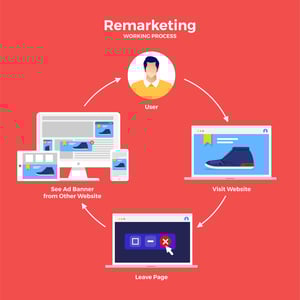
Remarketing (also called retargeting) lets you show ads to people who’ve already visited your site but didn’t convert. This tactic uses cookies to remind past visitors about your brand as they browse other websites. It keeps your business in their consideration set and increases the chance they’ll return and convert later. Remarketing is proven to work, especially when paired with a relevant offer and good timing.
| Over 50% of users who see retargeted ads are more likely to convert. |
5. Use Social to Connect with Your Target Audience More Effectively
Social ads help you reach highly specific audiences where they spend time every day. Platforms like Facebook, Instagram, and LinkedIn offer detailed targeting by demographics, interests, and behavior.
You can also build lookalike audiences by uploading your existing customer list, helping you find new leads who resemble your best customers.
Social media offers a direct line to your audience. It builds brand familiarity, trust, and loyalty, all essential for referral-driven growth.
Developing a Robust Paid Search Strategy
A solid paid search strategy is crucial to not only driving traffic to your site but also converting that traffic into leads and customers. Here are some elements to consider when developing your strategy.
Understand Your Audience
Before you can create an effective paid search strategy, you need to understand who your audience is. What are their needs and wants? What problems are they trying to solve? By understanding your audience, you can create ads that speak directly to them, increasing the chances of a click-through.
Keyword Research
As highlighted earlier in this blog, keyword research is crucial to a successful paid search strategy. The keywords you choose to target will directly impact the traffic you draw to your site. Using tools like Google Keyword Planner can help you find relevant keywords that your audience is using in their search queries.
Creating Engaging Ad Copy
Once you have your keywords, it's time to create your ad copy. Your copy should be engaging and relevant to the keywords you're targeting. It should also include a strong call to action, guiding users on what they should do next.
Optimize Your Landing Pages
The journey doesn't end with a click on your ad. Once a user lands on your site, you need to ensure that they find what they're looking for. This means having landing pages that are relevant to your ad copy and keywords and that offer a seamless user experience.
Track and Refine
A successful paid search strategy involves constant tracking and refining. Monitor your campaigns closely to see what's working and what's not. Use the insights you gain to refine your strategy, making the necessary adjustments to improve performance.
Developing a strong paid search strategy can be a significant driver of leads for your business. However, it requires careful planning, execution, and monitoring. By paying attention to these key elements, you can create a strategy that drives results.
| Clicks are nice, but leads and revenue matter more. Always align your KPIs with business goals—like cost per acquisition and return on ad spend. |
What is a Paid Search Strategy?
A paid search strategy, also known as pay-per-click (PPC) advertising, is a digital marketing approach where businesses pay to have their ads displayed on search engine results pages (SERPs) or other online platforms. With a paid search strategy, businesses bid on specific keywords relevant to their products or services, and their ads are displayed when users search for those keywords. The ads are typically labeled as "sponsored" or "ad" to differentiate them from organic search results. The cost of each click is determined through an auction-like system where the bid amount, ad relevance, and quality score are considered. Paid search allows businesses to target specific demographics, geographic locations, and search intent, ensuring their ads are shown to a highly relevant audience. It offers immediate visibility and potential traffic to a website, driving targeted leads and conversions. Effective paid search strategies involve careful keyword research, ad copy optimization, and ongoing monitoring and optimization to maximize the return on investment. By implementing a paid search strategy, businesses can increase their online visibility, drive targeted traffic to their website, and achieve their marketing goals more efficiently.
What is a Search Lead?
A search lead refers to a potential customer or prospect who has shown interest in a product or service by conducting a search query on a search engine. When a user enters a search term related to a particular product or service, they are actively seeking information or solutions. This presents an opportunity for businesses to capture and convert these search leads into customers. Search leads are valuable because they have expressed intent and are more likely to convert than leads generated through other means. By appearing prominently in search engine results pages (SERPs) through search engine optimization (SEO) or paid search advertising, businesses can attract search leads and direct them to their website or landing page. Once on the website, businesses can engage with search leads through compelling content, clear calls-to-action, and personalized messaging to nurture the lead and move them closer to purchasing or taking a desired action. Understanding user search intent, optimizing website content for pertinent keywords, and offering a seamless user experience are all necessary for efficiently capturing and converting search leads. By leveraging search leads, businesses can drive targeted traffic, increase conversions, and grow their customer base.
What Can Paid Search Do For You?
Even though Google does not publish its volume data, it is estimated that users make over 5.6 billion searches every single day! This is why more and more businesses are investing in paid searches to increase their chances of appearing in relevant search queries. So, how can paid search help your business?
- Accomplish your business goals to raise awareness or sell products and services by researching relevant keywords and bidding on them.
- Unlike SEO, paid search can help you develop your business strategy as you can receive and analyze results much more quickly. It is also much easier to set up without the need for creatives or design.
- With paid search, you have the freedom to optimize each component, including copy, keywords, landing pages, ad extensions, and more. This flexibility allows you to determine what works and what does not for customers.
- Another great benefit you can enjoy with paid searches is that it is cost-effective, without the restriction of a minimum spending requirement. Similarly, you will be charged based on the clicks only, reducing the need to unnecessarily spend on user impressions, especially those who are not interested in engaging.
Avoid Pitfall #1: Not Tracking Return on Investment

Tracking your return on investment (ROI) for a marketing campaign is critical. It provides you with an understanding of which strategies work in relation to your audience, budget, and other factors. This process also helps in better budget management, aligning your strategies with the investment you make. Overall, tracking your return on investment can help with the following:
- Identify strategies that are the most effective for your business.
- Understand which strategies have the most significant impact on your customers and potential consumers.
- Make better investment decisions in your marketing budget.
- Achieve your business goals by tracking what works and what does not.
Avoid Pitfall #2: Running on All Broad Match Keywords
A default match type, broad match keywords, can be used to display your ads if a user searches for a keyword, its variations, and searches related to it. For example, if your broad match keyword is 'woman's hat,' your ad will also be shown to people searching for hats, women's accessories, or women's caps. However, it is not recommended to use only broad-match keywords.
The beauty of using paid searches and researched keywords is that you can specifically target your customer and meet their needs. However, if you only use broad-match keywords, you may be in danger of grouping multiple users - even those uninterested in your product or services.
Avoid Pitfall #3: Focusing on Activities, Not Outcomes
Your marketing campaign must focus on outcomes instead of the activities that get you there. Activities, also known as outputs, are the avenues and actions you take to reach customers. Outcomes, on the other hand, are the results of the said activities. Businesses measuring the time and effort put into activities only get half a picture, as this does not necessarily guarantee marketing effectiveness or progress.
However, measuring outcomes can determine how effective your activities are, which is a more tangible determinant of the success of your marketing campaign.
Avoid Pitfall #4: Not Calculating the Conversion Rate Required
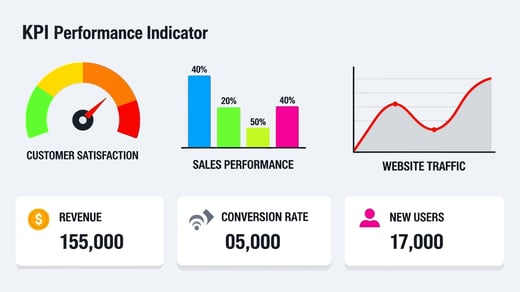
Simply put, your conversion rate identifies how effective your marketing campaign is. It shows if you are 'converting' users, i.e., making them do what you want them to. The most common types of conversions are buying your product, filling out a form, contacting your business, signing up, subscribing, and many more.
Calculating the conversion rate helps you understand which components of your campaigns are successful in engaging customers. Conversely, if your conversion rate is low, you can make the appropriate changes so customers are more inclined to interact with your business.
Avoid Pitfall #5: Not Forecasting Your Likely Results Before You Begin
At WSI, we believe forecasting should be at the heart of every marketing campaign to anticipate the results and goals that the business will achieve. In a nutshell, the reasons why forecasting is critical for business success are as follows:
- You can make better business and marketing investments.
- You can predict demand and plan more efficiently throughout the year.
- You can identify problems and mitigate them with ease
A Glossary of Abbreviations
 CPC
CPC
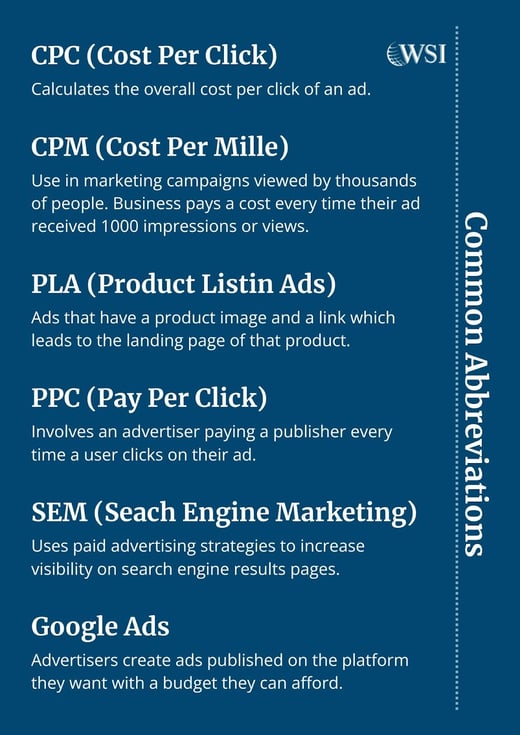
CPC, or Cost-Per-Click, is a metric that calculates the overall cost per click of an ad. For example, if you have paid $50 for an ad and received 50 clicks, you can conclude that each click has cost you $1.
CPM
CPM stands for cost per thousand impressions and is used in marketing campaigns viewed by thousands of people. This traditional marketing metric and paid advertising option are when a business pays a cost every time their ad receives 1000 impressions or views.
PLA
PLA or Product Listing Ads have a product image and a link that leads to a landing page of the said product. This is most often seen on Google Search Engine Results Page (SERPs) when a user types in a keyword.
PPC
PPC or Pay Per Click involves an advertiser paying a publisher every time a user clicks on their ad. It is an excellent method to increase your top-of-funnel leads.
SEM
Search Engine Marketing, or SEM, utilizes paid advertising strategies to increase visibility on search engine results pages.
Google Ads
Developed by Google, Google Ads is a dynamic space for advertisers to create ads published on the platform they want with a budget they can afford. These ads aim to reach the maximum number of people interested in a particular business's products and services.
Contact Us and Improve Your Local Search Results!
What other lead generation tactics can you employ to grow your business? Book a discussion with a WSI Digital Marketing Consultant today.